Craft of Kutch -
In the Kutch region of Gujarat, the festive vibrance of its tapestry is a show stealer but head to a small village in the district called Bhujodi and you will find a more subtle, elegant weave form.
With a rich weaving history of over 500 years, Bhujodi has transformed from a sleepy village to the beating heart of Kutch’s textile industry. Woven by nimble-fingered hands by the Vankar community, each thread is exactly where it should be, each pattern/motif well-thought out and positioned by a skill that goes back generations.
Bhujodi weaving, a well-known craft from the Kutch region of Gujarat derives its name from “Bhujodi”; one of the oldest and biggest artisan villages. It is home to the Vankars (weavers) who weave a 500-year-old story into every shawl, every blanket and every stole.
Who are the Vankars?
The Vankars (meaning weavers) are descendants of the Meghwal (Marwada) clan who migrated to Kutch from Rajasthan over 5 centuries ago. As history goes, they used to weave coarse handspun woolen blankets and traditional wear for the shepherd (the Rabaris) and local farming communities (the Ahirs) in exchange for fleece, milk products and grains. They were the only clientele for these Bhujodi weavers back then.
On a customary walk through the village, you will find at least one loom in every home and the entire family comes together to partake in the weaving process. The specialty of the weave is how they use simple, geometric motifs to create a piece of art.

Pic Courtesy: Garima A, Artisanscentre.com & Shutterstock
For years, the weavers of Bhujodi have created a harmonious barter system between themselves and the Rabari clan (cattle herders). The Vankars began to experiment with cotton (Kala cotton) that was sourced locally and naturally grown. However, the woven fabric served limited purposes to the weavers as it was extremely thick, but it allowed them to play around with colorful intricate designs. Over time, the narrow loom which was manually operated got an upgrade by adding a foot-over pedal and this considerably improved control on the shuttle movement. This undoubtedly eased the process of weaving which was otherwise a very tedious process.
Process of Bhujodi weaving -
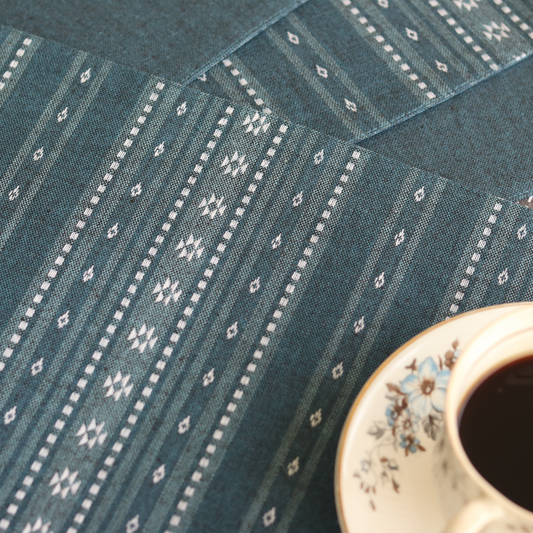
The traditional Kutchi weaving was done on a vertical frame loom (Punja) but later horizontal pit looms were used. The horizontal loom has four paddles with a pit where the weavers rest their legs to operate the paddles. The process of Bhujodi weaving is called the “Extra Weft” technique where intricate patterns are all created using fingers by lifting the threads of warp and inserting a weft thread in between. A single weft thread is passed through to create patterns along the border and multiple threads of weft are used to form motifs on the fabric.
The women in the family prepare the warp for spinning the yarn on a local spinning wheel (charkha) and also assist in adding those final touches (embroidery & mirror work) once the men are done with weaving. Traditional colors commonly found in Bhujodi weaving are indigo, white, maroon, black and green, and shades of pink and grey depending on the intensity of the natural dyes. The uniqueness of this technique is the motifs woven are quite explicit and create a bold texture against the plain fabric which looks like embroidery.


Pic Courtesy: Garima A, Artisanscentre.com & Shutterstock
What makes Bhujodi famous?
Every hand-spun shawl, stole, dupatta, blanket, and carpet woven is a beauty crafted by the Vankars. It can take days or even months for a craftsman to finish the intricate designs, all done by hand. Traditionally, shawls were made from wool but now silk, cotton, acrylic is procured from across the country to make the finest handloom products. The Vankars create simple geometric motifs and arrange them aesthetically into a fabric using a special technique. The woolen weave not only provides warmth during the harsh winters but also keeps one cool during summers when it's loosely woven. In the Vankar community, while the arduous process of weaving is done by the men, the women are responsible for preparing the yarn and spinning of wool.
Today, Bhujodi weaving is a craft that is practiced by over 200 weavers from the village. In order to keep up with the changing needs of the market and to meet the growing demand, yarns have become finer and the natural coarse cotton is now replaced with synthetic fibers, while the looms are being operated by pedals for faster results. The appeal of its handcrafted cloth is now widespread, and the village has become synonymous with "Kutchi weaving".
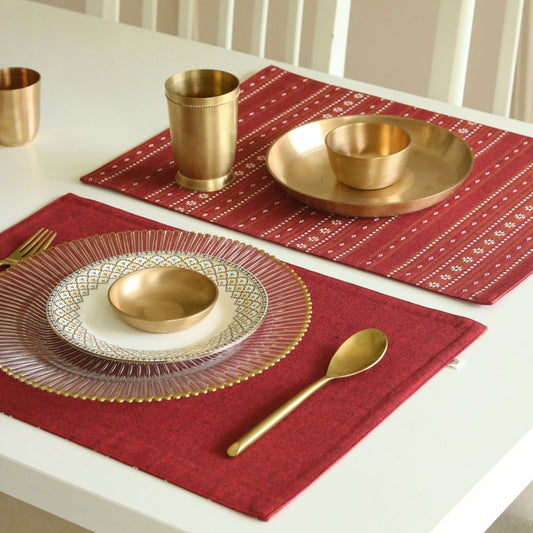
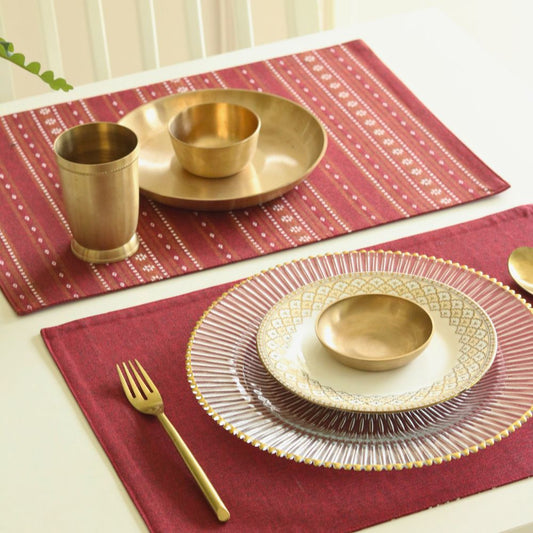
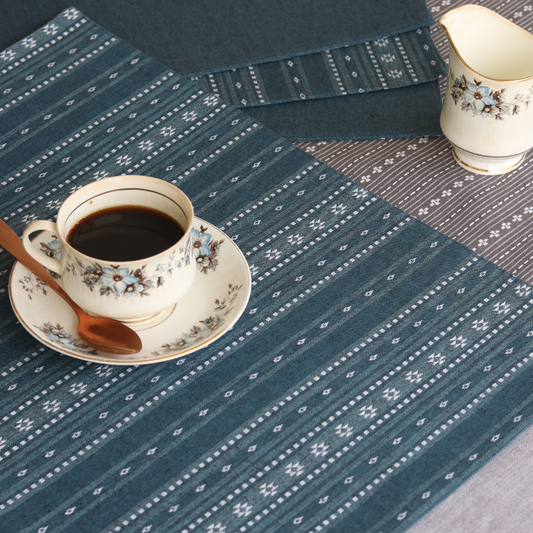
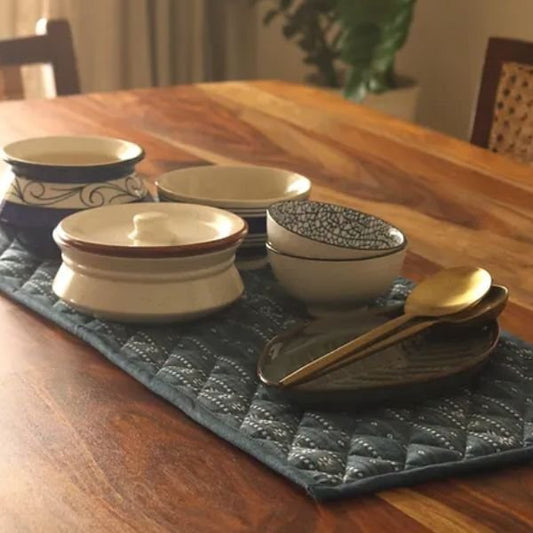
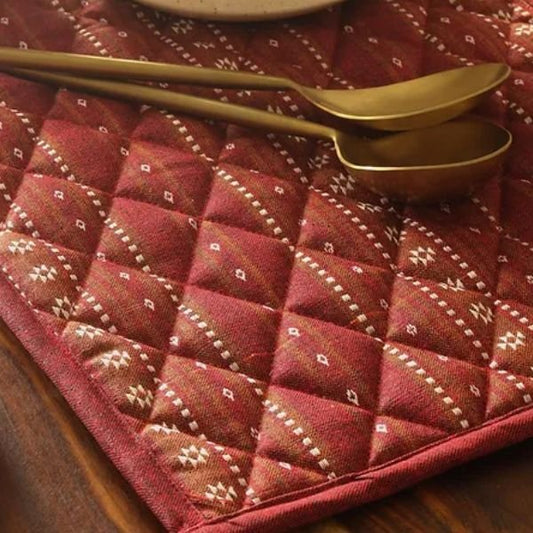
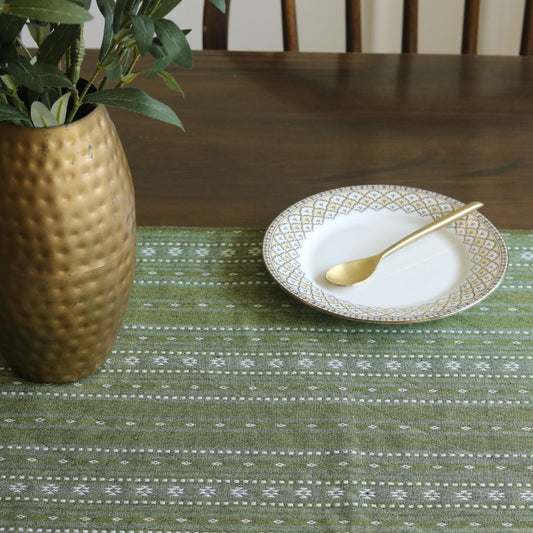
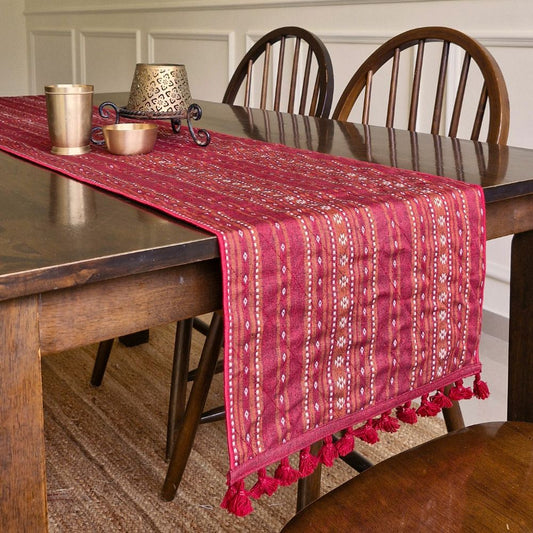
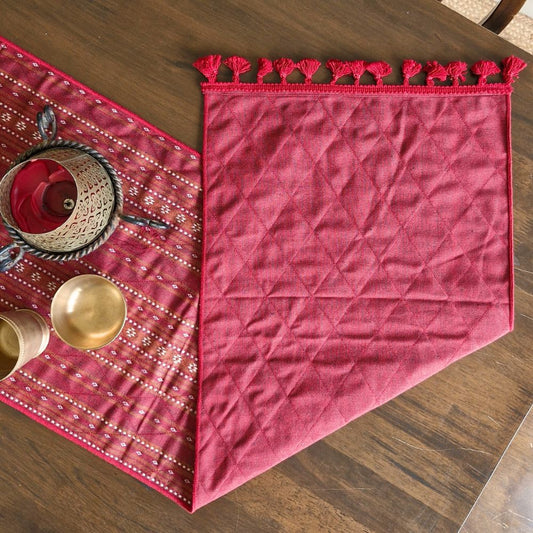
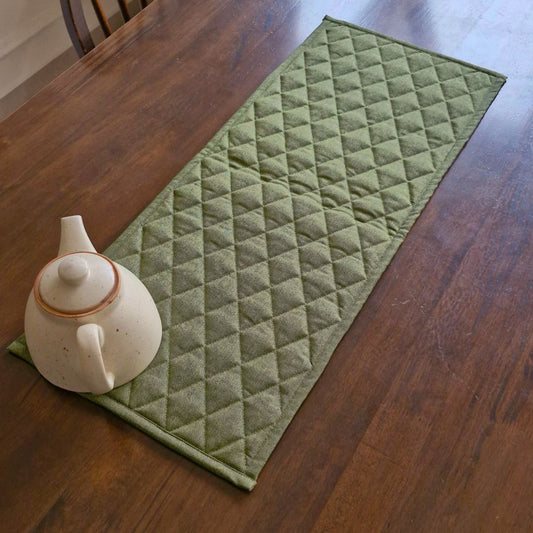
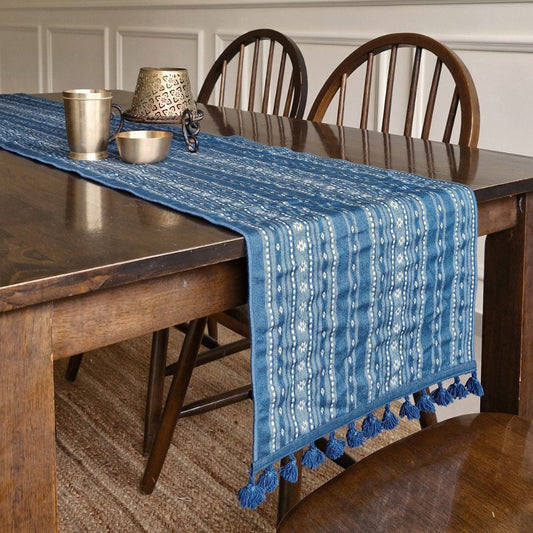
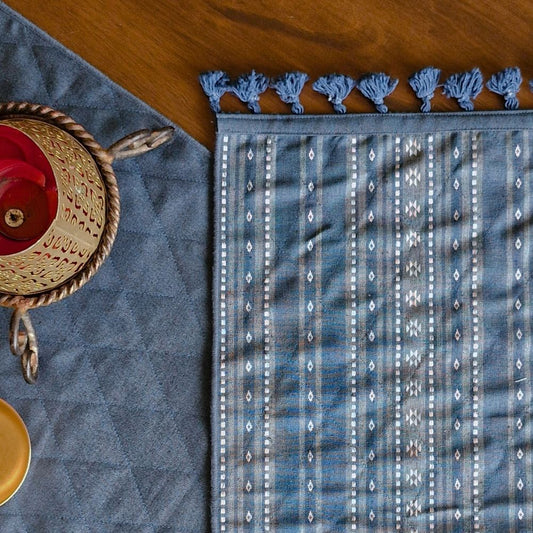
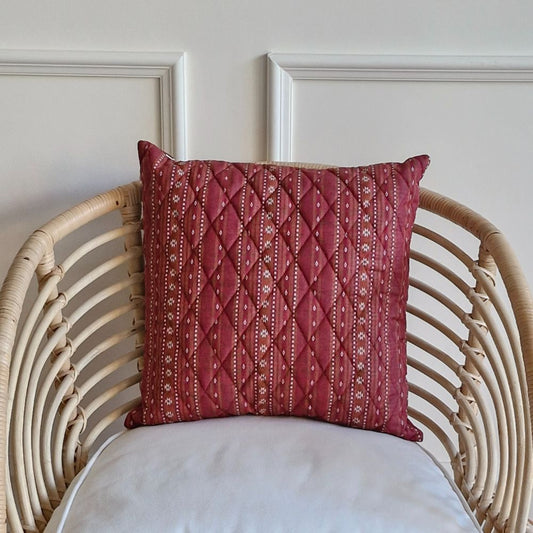
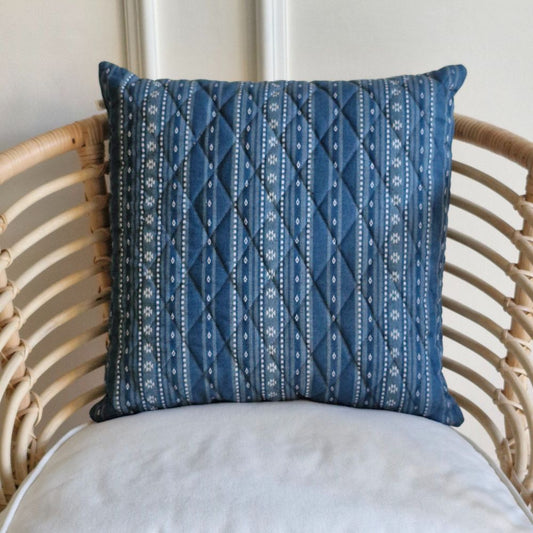
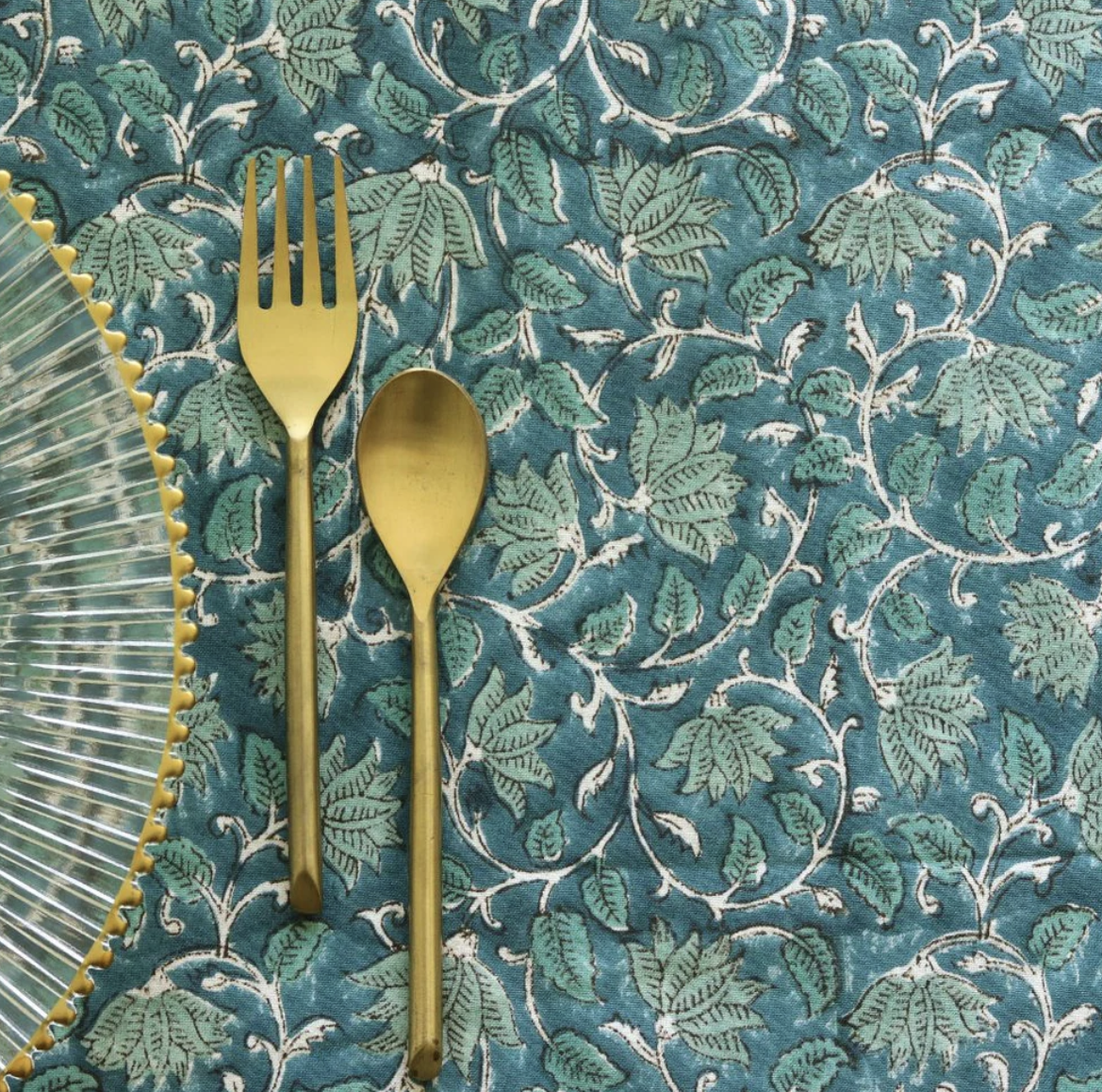
Today, this rich heritage translates beautifully into contemporary home spaces - at The Yard House, these traditional palettes inspire signature table accents, bringing the craft alive in rich Woven Ruby Red, Woven Moss Green, and deep Woven Aegean Blue.


Motifs of Bhujodi -
The Bhujodi weave is rather generous with its use of simple geometric motifs such as triangles, stripes, diamonds, star shapes and chevrons. Most of their designs are created with linear patterns bestrewed with motifs that run throughout the body of the fabric.
For inspiration, the artisans do not have to look very far – their home state of Gujarat has a rich trove of forts and other famous architectural monuments that form the perfect backdrop for the Bhujodi designs. The patterns are original and characteristic to the Kutch style and are formed by specific motifs being repeated in various ways.
Some popular motifs found in Bhujodi weaving are -

- Popati - is a simple motif of a triangle that repeats itself in various forms to create complex motifs
- Chaumukh - four Popati motifs combined form this breath-taking motif.
- Panjka - this motif is created by joining two opposite triangles in the middle.
- Damroo - is a drum shaped motif
- Jhaad – draws inspiration from nature and resembles a tree.
- Khungri – is a motif designed to look like a ‘zigzag’ line.
In addition, there are motifs such as Sachchi Kor, Lath, Sathkhani, Macchhar, Hathi, Vakiyo, which are inspired by village scenery.
The changing times -
Growing demand and changing tastes of consumers has pushed the Bhujodi weavers to think more creatively and push the boundaries of convention. The weavers now marry tradition and simple modernity to design products that are more contemporary.
Traditionally, the Bhujodi weavers preferred working with goat, sheep and camel wool but today they also work with other materials like silk, acrylic and cotton from across the country. They have also worked on expanding their product line moving away from only shawls and stoles to sarees, dupattas, cushion covers, bedsheets, and curtains. Constant refinement and innovation have helped Bhujodi weaving stand out from the rest and has garnered a lot of followers both in India as well as internationally.
Brands passionate about preserving artisanal crafts, like The Yard House, collaborate with these master weavers to reimagine the technique for modern dining and living spaces. Through curated collections featuring handwoven table runners and placemats, the timeless beauty of extra-weft Bhujodi weaving finds a permanent place on everyday dining tables.
AUTHOR
Deepthi Velkur (@deepthi9844) is a Bangalore-based freelance digital content writer and mom to a busy 10-year-old. Her writing credits include health and fitness magazines, running stories, and wedding planning articles. While redecorating her apartment she fell in love with home styling and now marries her love for home decor with writing.